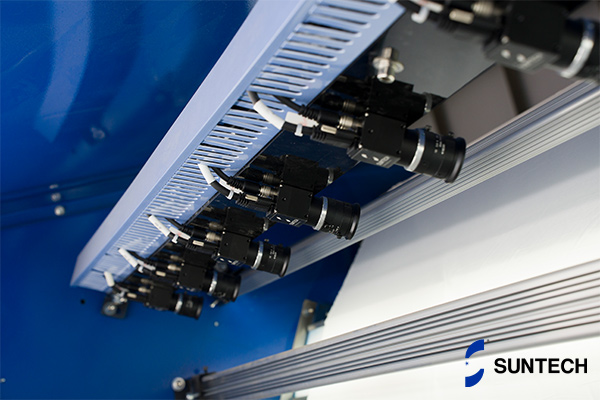
In today’s increasingly competitive textile industry, quality control is not just about product pass rates—it directly impacts customer satisfaction and corporate profitability. Many manufacturers are still weighing the options: continue relying on manual cloth inspection, or invest in an upgrade to an AI fabric inspection automated system?
From a long-term Cost-Benefit Analysis (CBA) perspective, the following five key factors are critical to your decision-making.
Labor Costs vs. Long-term Automation Investment
The Cost Structure of Manual Inspection:
- Multi-shift labor investment (typically 3 shifts for 24-hour operation).
- Training costs and the risk of high staff turnover.
- Costs associated with missed defects and misjudgments caused by fatigue. While manual inspection seems to have lower upfront costs, labor expenses continue to rise over time, accompanied by numerous uncontrollable variables.
The ROI of AI Fabric Inspection: An automated AI fabric inspection system requires a one-time investment but ensures stable operation while significantly reducing labor dependency. As order volumes scale, the unit inspection cost decreases, offering a superior long-term ROI.
Detection Accuracy and Consistency
Manual cloth inspection is heavily experience-dependent. Standards vary between inspectors, often leading to:
- False Negatives (Missed defects)
- False Positives (Misjudgments)
- Inconsistent quality standards
In contrast, AI visual inspection systems based on deep learning undergo continuous training and data optimization. They maintain stable recognition precision and exceptional consistency when detecting defects such as oil stains, holes, broken warps, and neps. Quality stability is often the deciding factor in securing long-term contracts from major clients.
Inspection Speed and Throughput Matching
Manual inspection is limited by human operating speeds and attention spans. Automated AI fabric inspection equipment can operate continuously at high speeds, achieving:
- Stable, high-speed detection.
- Fatigue-free operation.
- Seamless integration with existing production lines.
This is particularly vital for high-volume orders. An increase in inspection speed translates directly into shortened overall lead times.
Data Traceability and Quality Management
Manual records are typically paper-based or stored in simple spreadsheets, making it difficult to form a comprehensive quality database. An automated cloth inspection machine can:
- Automatically generate defect maps.
- Categorize defect types and analyze their distribution.
- Support data traceability and root-cause analysis.
- Provide data-driven insights for process improvement.
Digitalized quality management is a cornerstone of the transition to Smart Manufacturing.
Hidden Costs: Returns, Rework, and Brand Risk
Manual inspection oversights can lead to:
- Customer returns and claims.
- Financial penalties.
- Damage to brand reputation.
By improving detection precision and consistency, AI fabric inspection effectively mitigates quality risks. Preventing a single large-scale return can often cover a significant portion of the equipment investment cost.
Which Method is Right for Your Factory?
If your facility is facing the following scenarios:
1. Expanding order scales.
2. Continuously rising labor costs.
3. Increasingly stringent quality requirements from clients.
4. A desire to implement digital management.
Then upgrading to an AI fabric inspection automated solution will provide a stronger long-term competitive advantage. While manual inspection may offer short-term flexibility for small-scale orders or simple product structures, automation and intelligence are the definitive trends of the industry.
FAQ: Common Questions on Manual vs. Automated Inspection
Q1: Does AI fabric inspection completely replace human labor?
We generally recommend a "Human-Machine Collaboration" model. The AI system handles high-speed primary inspection and data logging, while human staff perform spot checks and handle complex edge cases, achieving maximum efficiency and stability.
Q2: Is the automated system applicable to different fabric types?
Yes. Modern AI visual inspection systems can be trained to adapt to various materials, including woven, knitted, denim, and technical textiles.
Q3: How long is the typical payback period?
This depends on order volume and local labor costs. For high-volume production plants, a return on investment is typically realized within a relatively short cycle.
Q4: Can it be integrated with existing production lines?
Most automated cloth inspection systems support system integration with existing hardware, allowing for seamless upgrades and retrofitting.
Conclusion
In the context of the textile industry’s shift toward smart manufacturing, simply comparing "sticker prices" is no longer enough. The true metrics for evaluation are total cost, long-term gains, and quality risk mitigation. The choice between manual and automated is not just a matter of cost—it is a strategic decision for the future competitiveness of your enterprise.