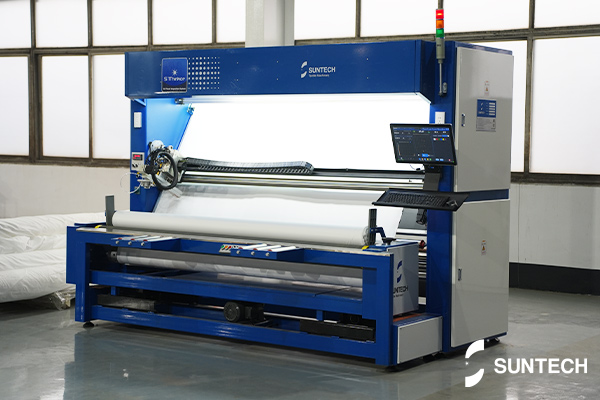
As the textile industry moves rapidly toward Smart Manufacturing, AI fabric inspection is steadily replacing traditional manual *cloth inspection*. Deep learning-based AI visual inspection systems do more than just improve detection accuracy—they build a digital quality management framework for the enterprise, serving as a vital link in the Industry 4.0 upgrade.
However, with numerous AI fabric inspection machine manufacturers in the market, technical proficiency and service capabilities vary significantly. How do you choose a partner that truly aligns with your growth strategy? This article outlines the key factors for consideration and introduces representative suppliers in the industry.
I. Why Choose AI Fabric Inspection?
Compared to traditional manual inspection, AI-driven cloth inspection systems offer distinct advantages:
High Consistency and Precision: Eliminates subjective human error.
High-Speed Continuous Operation: Ideal for large-scale, high-volume orders.
Automated Data Generation: Instant defect maps and quality reports.
Support for Data Traceability: Provides insights for production process optimization.
For weaving and dyeing mills aiming to enhance delivery quality and reduce return risks, AI fabric inspection has become a core tool for quality upgrades.
II. 5 Key Criteria for Selecting an AI Fabric Inspection Manufacturer
1.Algorithmic Capability and Defect Databases
Deep learning algorithm support.
An extensive, high-quality defect database.
Capabilities for continuous model training and optimization.
High recognition rates for complex defects (e.g., broken warps, oil stains, holes, color shading, dropped stitches).
Algorithmic strength is the core metric of the equipment’s value.
2. Detection Speed and Stability
In a real-world production environment, inspection speed directly impacts overall throughput. Leading AI cloth inspection machines maintain stable recognition precision even at high speeds. For instance, advanced systems can handle woven fabrics at high velocities while maintaining pinpoint defect identification for large-scale continuous production.
3. System Integration (Industry 4.0 Compatibility)
True Industry 4.0-ready AI visual inspection equipment should support:
Integration with MES / ERP systems.
Synchronization with automated packaging systems.
Real-time data uploads and remote monitoring.
Visualization of production quality data.
This determines whether the machine is just a "tool" or a vital part of a smart factory.
4. Localized Service and Technical Support
An AI system is a combination of hardware and continuous software/algorithm optimization. When choosing a supplier, consider:
Remote diagnostic capabilities.
Software and model upgrade support.
Availability of local technical teams.
Proven global project experience.
Stable service capability directly impacts long-term operational success.
5. Industry Track Record and Practical Experience
A mature supplier typically offers:
Extensive years of experience in the textile industry.
Proven case studies in large-scale weaving, dyeing, or denim facilities.
Experience in successfully deploying fully automated AI fabric inspection lines.
Real-world application scenarios are far more persuasive than theoretical parameters.
III. Notable AI Fabric Inspection Manufacturers
In the global market, several companies are highly recognized for their expertise in AI fabric inspection:
- Uster Technologies (Switzerland): A premier brand in textile quality testing with deep technical roots, focusing on data analysis and quality standardization.
- OSHIMA (Taiwan): An early adopter of AI visual inspection technology with specific strengths in denim and high-difficulty fabric detection.
- SUNTECH (Global) – Integrated Automation Solution Provider:
As a manufacturer specializing in intelligent textile equipment, SUNTECH continues to deepen its presence in the AI fabric inspection sector. Its automated camera-based cloth inspection equipment integrates:
- Deep learning algorithm recognition.
- High-precision industrial vision systems.
- Stable tension control technology.
- High-speed detection (reaching up to 80m/min for woven fabrics).
- Automatic generation of defect maps and data reports.
- Seamless linkage with automated packaging and AGV/Smart Warehousing systems.
Unlike niche equipment suppliers, SUNTECH emphasizes "total automation solutions," integrating AI inspection with packaging, AGV handling, and smart storage to build a complete automated logistics and quality ecosystem.
IV. Is SUNTECH the Right Fit for Your Factory?
If your enterprise has the following requirements:
- High order volume with strict requirements for quality consistency.
- A goal to reduce reliance on manual three-shift labor.
- A need to digitize inspection data for better management.
- Plans to integrate with automated packaging or smart warehousing.
Then deploying an AI fabric inspection automated system will significantly boost your long-term competitiveness.
FAQ: Choosing an AI Fabric Inspection Manufacturer
Q1: Is it mandatory to choose an international brand?
Not necessarily. The key lies in algorithmic capability, system stability, and technical support rather than brand name alone.
Q2: Is AI fabric inspection suitable for different fabrics?
Yes. Modern systems can be optimized through model training for woven, knitted, denim, and even technical textiles.
Q3: Does inspection speed affect accuracy?
Mature AI visual inspection systems are designed to maintain a stable and high recognition rate even at peak operating speeds.
Q4: How do I evaluate ROI?
We recommend a comprehensive analysis that includes labor cost savings, order scale, reduced return/claim risks, and the added value of improved quality for your clients.
Conclusion
In the era of Industry 4.0, choosing an AI fabric inspection machine manufacturer is more than buying a piece of equipment—it is choosing a long-term strategic partner. Whether opting for a traditional international brand or an integrated solution provider like SUNTECH, the goal remains the same: stable quality, efficient production, digital management, and enhanced long-term profitability.
When quality becomes controllable and production stable, your enterprise gains a definitive edge in the global market.